
Home » RevCO – Revenue Content Operations Model
RevCO is Content Monsta’s proprietary operating model for building, operating, and scaling content as a revenue-supporting system through cumulative impact.
Reduce wasted content effort, increase Sales adoption, and improve executive confidence in content investment.
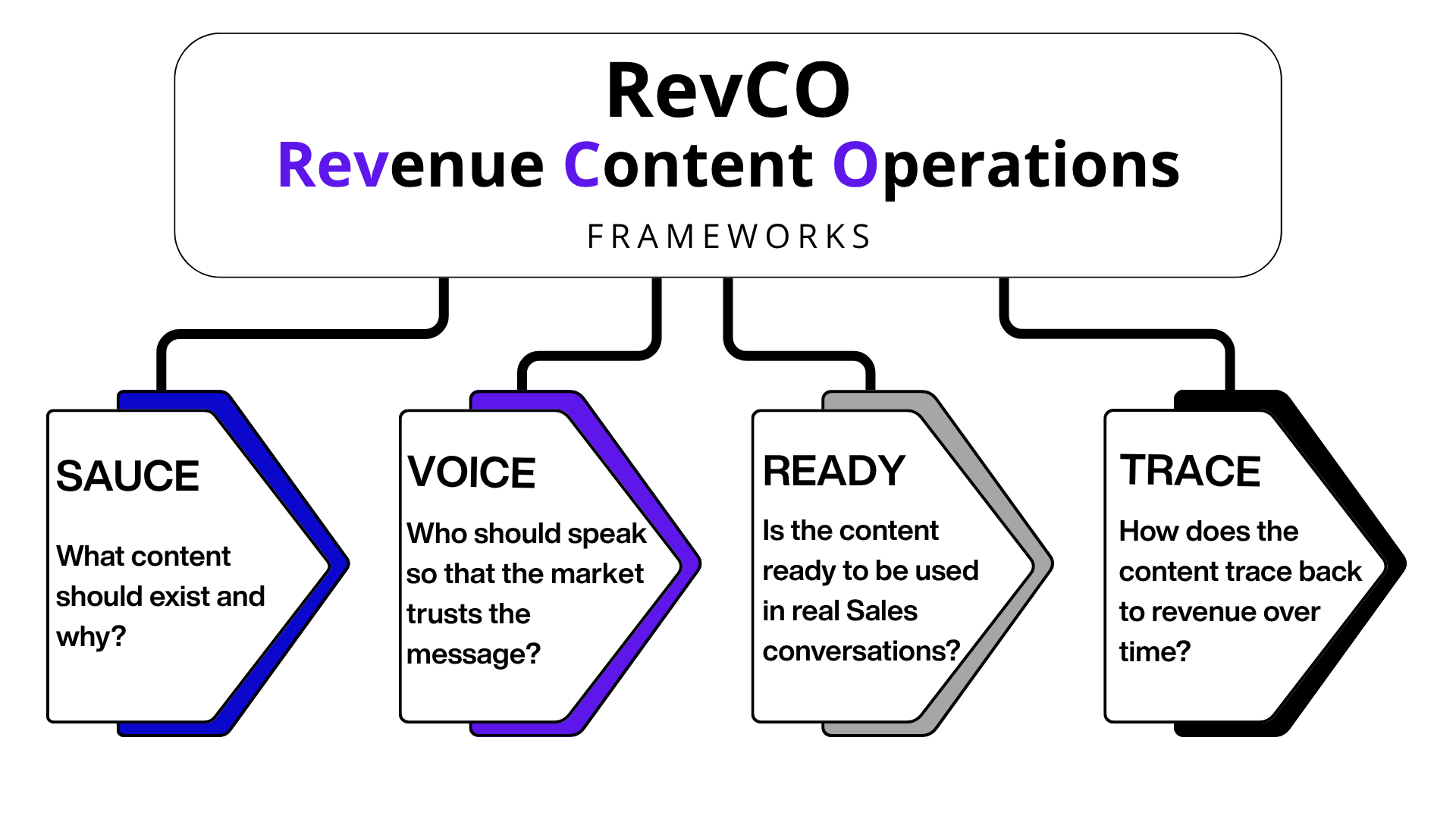
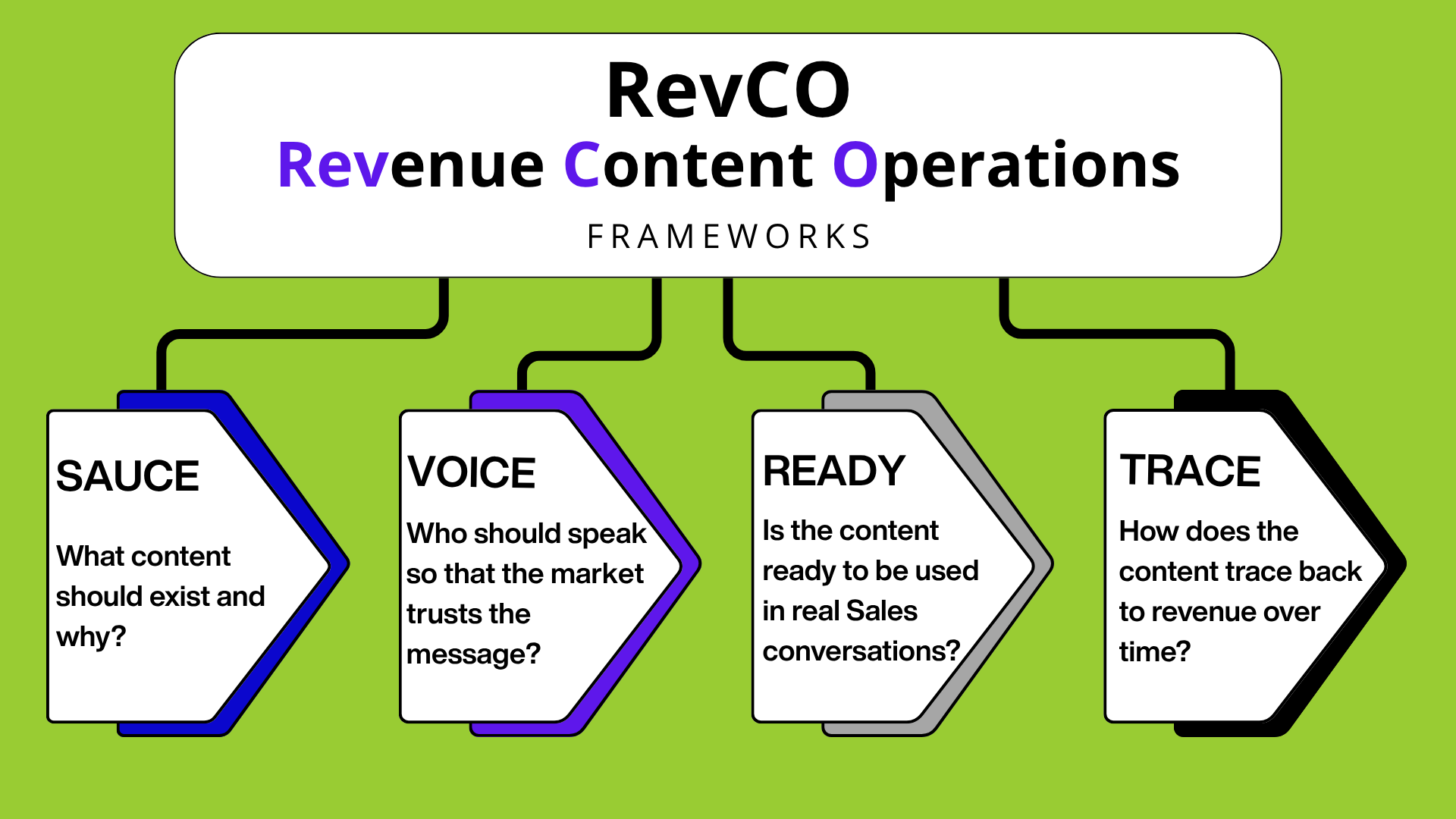
RevCO is made up of four frameworks – SAUCE, VOICE, TRACE, and READY.
Each framework answers a different operational question. Together, they create a complete model for Revenue Content Operations.
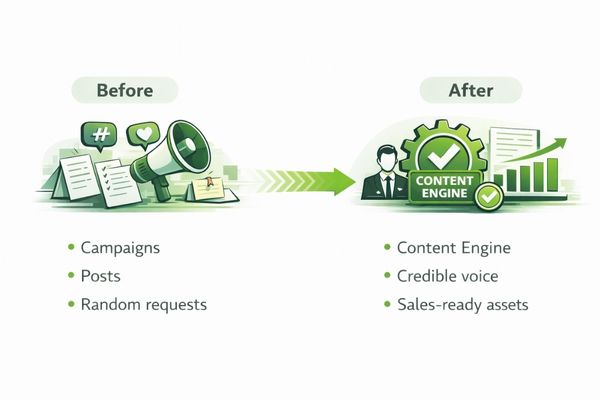
Most organizations produce content activity. RevCO builds content infrastructure, content that can be defended, reused, and applied in real revenue conversations.
SAUCE is how Content Monsta designs and clarifies the Content Engine. The elements of the SAUCE framework are Strategy, Audience, Users, Contribution, and Execution. SAUCE is used to guide key decisions that make content purposeful, reusable, and defendable before anything gets produced.
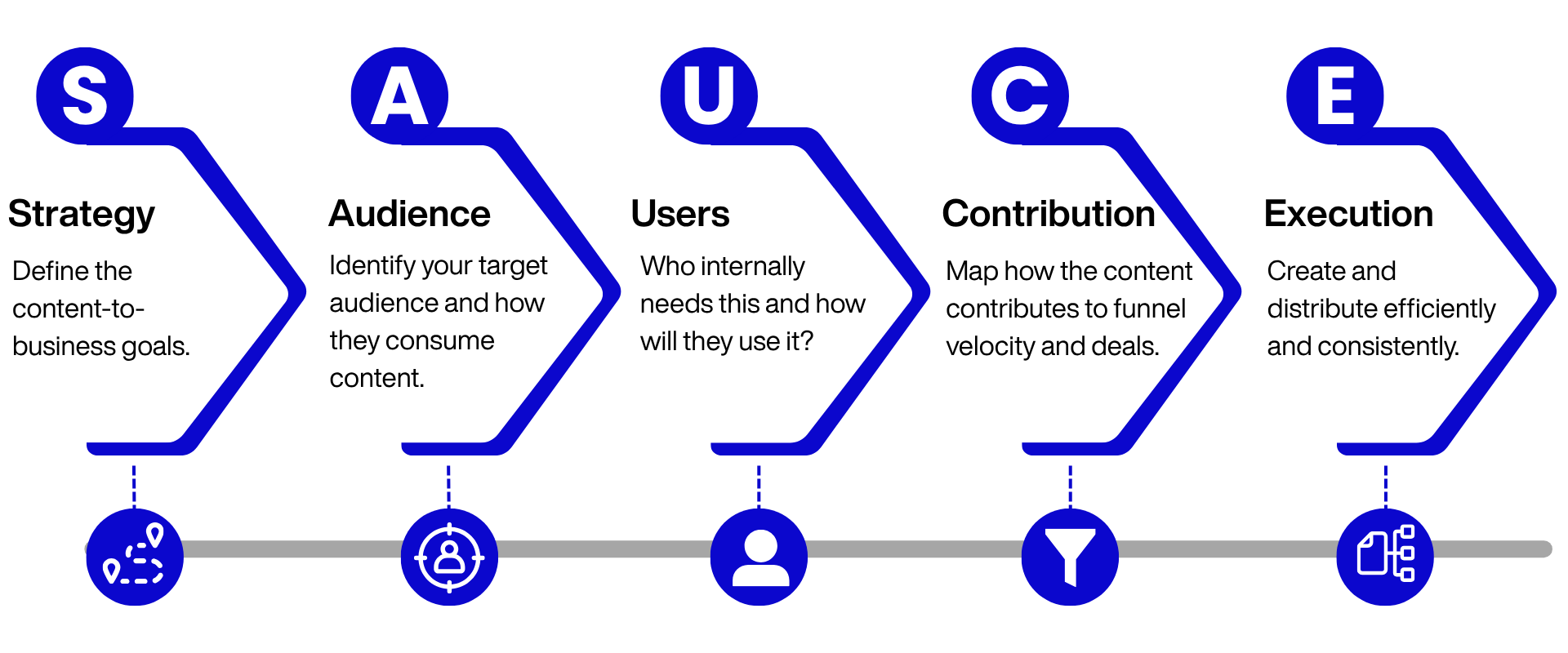
Strategy – Define the content-to-business goals.
Audience – Identify your target audience and how they consume content.
Users – Who internally needs this and how will they use it?
Contribution – Map how the content contributes to funnel velocity and deals.
Execution – Create and distribute efficiently and consistently.
Value of SAUCE
VOICE defines who should carry the message. The elements of the VOICE framework are Viewpoint, Ownership, Insight, Cadence, and Enablement. In B2B, buyers trust people with experience and judgment. VOICE gives a standard for credibility and consistency, not brand-safe noise.
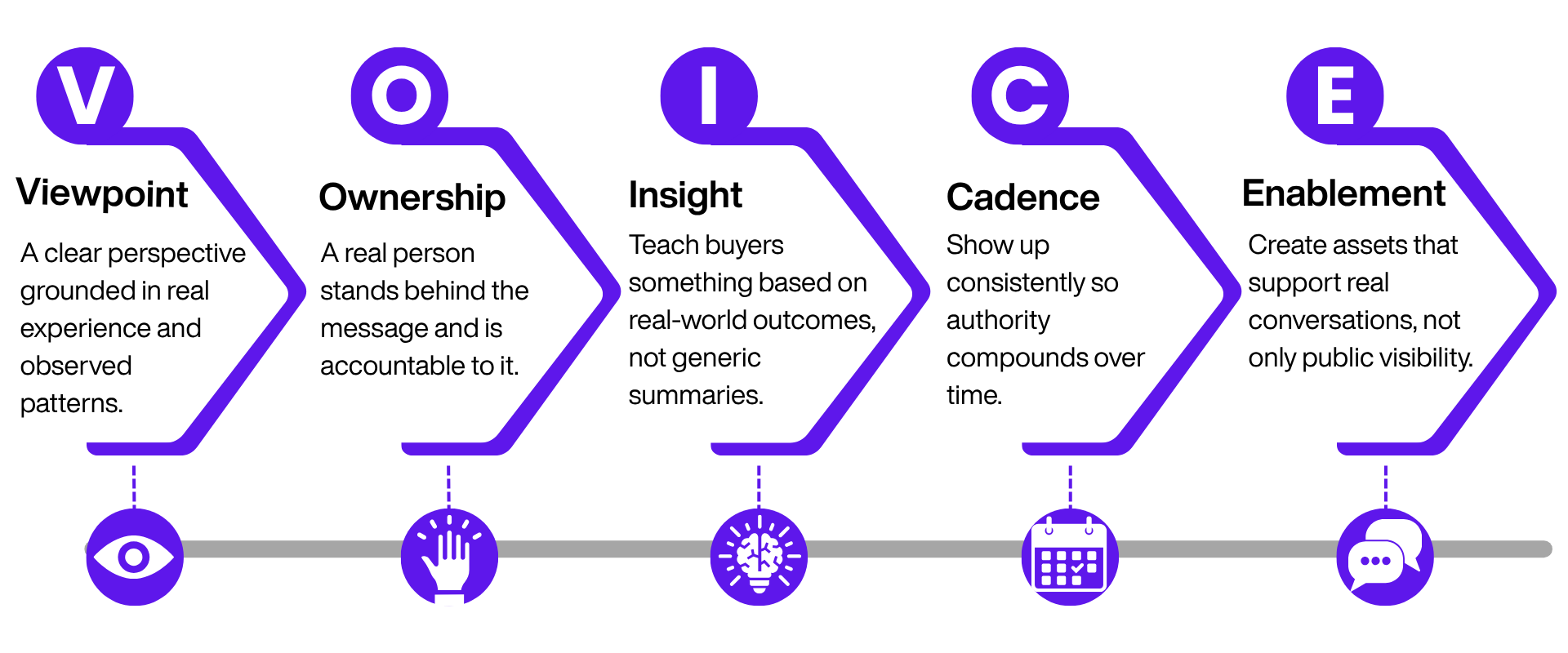
Viewpoint – A clear perspective grounded in real experience and observed patterns.
Ownership – A real person stands behind the message and is accountable to it.
Insight – Teach buyers something based on real-world outcomes, not generic summaries.
Cadence – Show up consistently so authority compounds over time.
Enablement – Create assets that support real conversations, not only public visibility.
Value of VOICE
READY is the operational test that determines whether content is usable inside live Sales conversations. The READY framework consists of the elements Relevant, Easy, Answers, De-risk, and Yield. It protects the organization from creating content that looks good but does not move deals.
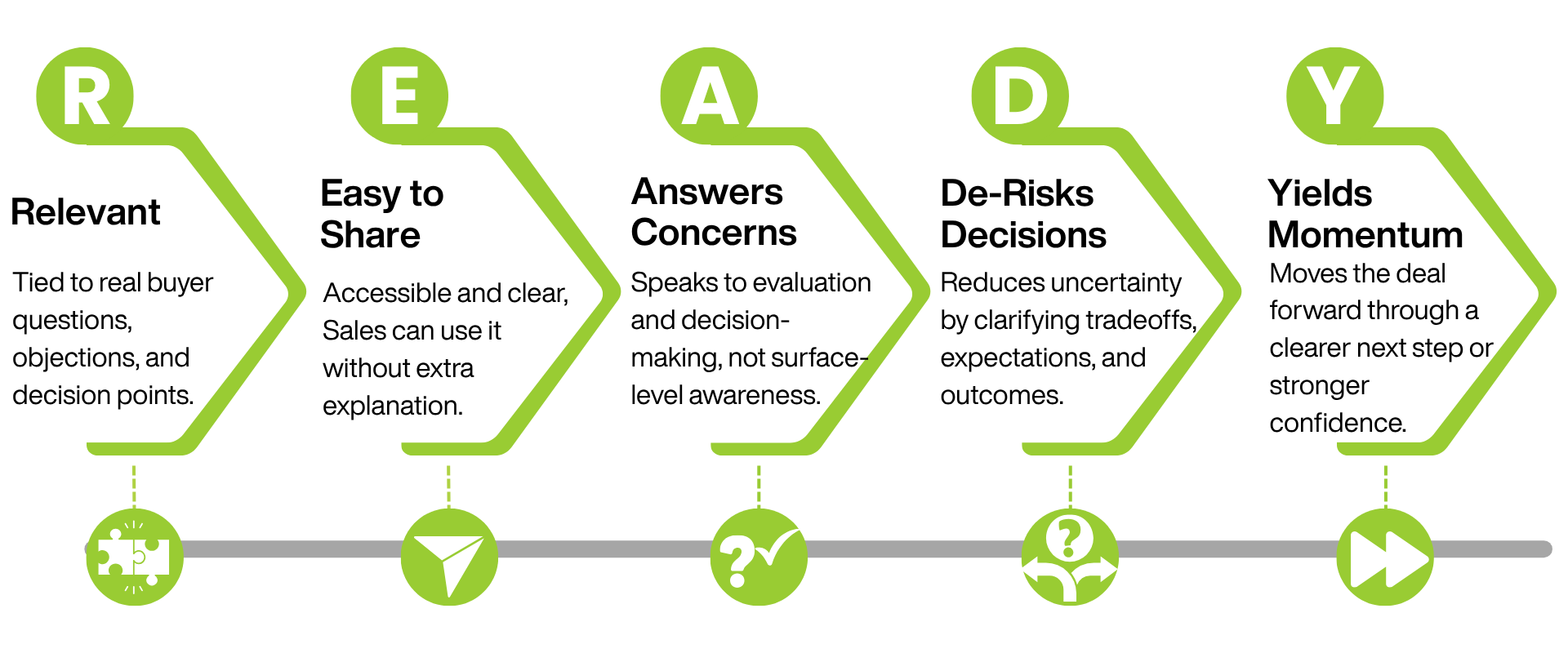
Relevant – Tied to real buyer questions, objections, and decision points.
Easy to share – Accessible and clear, Sales can use it without extra explanation.
Answers buying-stage concerns – Speaks to evaluation and decision-making, not surface-level awareness.
De-risks decisions – Reduces uncertainty by clarifying tradeoffs, expectations, and outcomes.
Yields momentum (bonus) – Moves the deal forward through a clearer next step or stronger confidence.
Value of READY
TRACE explains how content influences revenue over time and why the impact can be indirect. The TRACE framework consists of the elements Trust, Reach, Authority, Confidence, and Enablement. It exists to reduce friction in approval conversations and align expectations around cumulative impact.
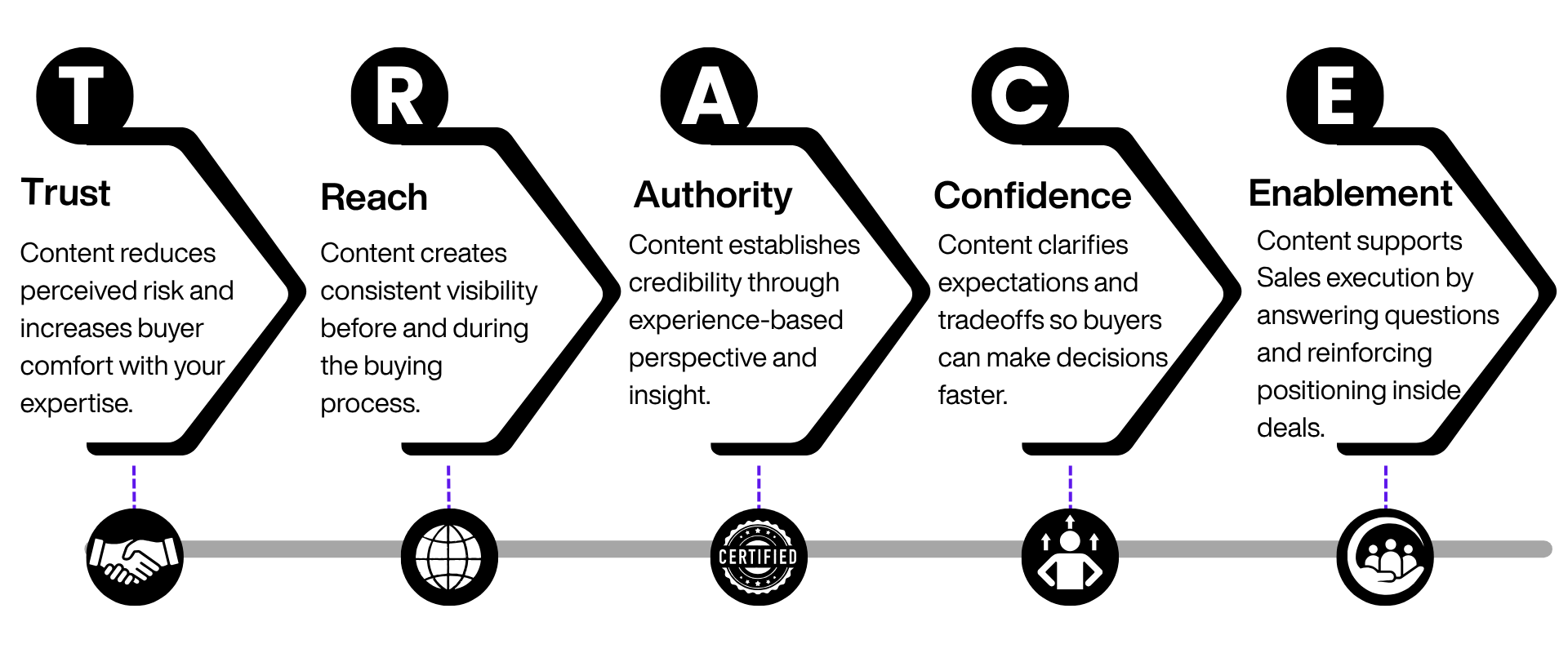
Trust – Content reduces perceived risk and increases buyer comfort with your expertise.
Reach – Content creates consistent visibility before and during the buying process.
Authority – Content establishes credibility through experience-based perspective and insight.
Confidence – Content clarifies expectations and tradeoffs so buyers can make decisions faster.
Enablement – Content supports Sales execution by answering questions and reinforcing positioning inside deals.
Value of TRACE
RevCO is applied as a sequence of operating decisions. The order matters because it prevents content from being created first and justified later.
SAUCE: Define the Content Engine
Decide what content should exist, who it is for, who uses it, what it contributes, and how it will be executed consistently.
VOICE: Assign credibility
Identify the people whose experience and perspective should carry the message, then build consistent presence around them.
READY: Validate enablement usability
Confirm that key assets are relevant, shareable, decision-supportive, and capable of moving deals forward.
TRACE: Set executive expectations
Align leadership on how content influences revenue indirectly and cumulatively, then measure progress with that lens.
What RevCO Produces
Proprietary Method
RevCO (Revenue Content Operations) combines content engine design, authority-led content sourcing, Sales Enablement readiness checks, and an executive revenue influence model into one system for consistent, defensible content decisions.
Operating Standards
RevCO is the set of decisions and operating standards that ensure content is created with purpose, led by credible voices, usable in Sales conversations, and evaluated with realistic leadership expectations for revenue influence over time.
“Our RevCO model focuses on cumulative impact, building a content infrastructure that surrounds the buyer until revenue becomes the natural byproduct of the ecosystem.”
~ A. Lee Judge, Founder – Content Monsta
