
Table of contents
Ranking on the first page of Google used to be the goal. Marketers spend months writing blog posts, optimizing keywords, and building backlinks. AI answer engines are changing how people find information, and most of that content never gets clicked.
The numbers are already showing it. Ahrefs found that AI overviews reduced organic click through rates for the number one position by 58%. SparkToro found that 68% of US Google searches ended without a click, up from about 60% two years earlier.
If your content strategy has not changed after all of that, your content is becoming invisible. Here is how traditional SEO content is failing, and what to do instead.
I have spent more than 15 years working with global brands to improve their marketing, and my agency serves dozens of companies building content machines that drive revenue. I have used what follows to help companies stay visible as AI search reshaped the landscape. The companies we work with are getting cited in AI answers, because we changed how their content is built from the ground up.
The Search Game Has Changed
Gartner projected a major decline in traditional search volume, and the data is confirming it. The old playbook of rank on page one and get traffic to your website is breaking down. Ranking high no longer guarantees that anyone visits your site.
Here is what happened. AI answer engines like Google AI Mode, ChatGPT, and Perplexity read your content, summarize it, and give the answer directly to the user. The user never has to click.
This means your content needs a new job. Instead of driving clicks, it needs to be the source that AI trusts enough to cite.
AEO Is the New Playbook
The term to know is AEO, Answer Engine Optimization. The label may not stick around long, but the concept will. SEO is about ranking pages, and AEO is about being selected as part of an answer.
Think of it this way. When someone asks AI a question about your industry, does your content show up in that answer? If it does not, you have an AEO problem.
Conductor’s 2026 AEO benchmarks report analyzed 21.9 million keywords and found that Google AI overviews appear for about 25% of them, with that number growing every month.
The fix is straightforward. Your content needs to answer the main question in plain language within the first few lines, then expand into details, examples, frameworks, and implementation steps. AI systems favor content that is structured, answers questions directly, and demonstrates real expertise.
Fluffy, keyword stuffed content does not cut it, and it will be ignored.
Depth and Trust Beat Keywords and Backlinks
Here is a stat from Seer Interactive that should change how you think about content. Brands that were cited in AI overviews earned 35% more organic clicks than brands that were not cited.
AI systems look for signals of authority and trustworthiness. They want content from real experts with real experience.
This is good news for businesses that invest in quality content. If your content is written by someone who actually knows the subject, it has a better chance of being cited than a generic SEO article from a content farm.
Ahrefs found that AI overviews reduced organic click through rate by 58% for the top ranked result, 50.8% for the second position, and 46.4% for the third. The brands getting cited inside those AI answers are gaining clicks, not losing them.
So the takeaway is simple. Stop chasing keywords. Start building content that demonstrates genuine expertise on specific topics.
Why Multi-Format Content Gives You an Edge
AI search engines pull from multiple content types, including video, audio, and structured data. Video content, podcast transcripts, case studies, and structured data all feed into AI systems. The more formats your expertise shows up in, the more likely you are to be cited.
When you create a video and pair it with a transcript, a blog article, and structured data on your website, you give AI multiple signals that you are an authority on that topic. This is why a content system matters more than a content calendar.
Individual pieces of content are not enough. You need a connected system where every piece supports and reinforces the others.
Gartner projects that by 2028 some brands could see organic traffic drop by 50% or more. The businesses building multi format content systems now are the ones that will still be visible when that happens.
Where to Start
Start with an audit of your top performing content. Look at your highest traffic pages and ask whether each one answers a specific question in the first two sentences. If it does not, restructure it.
From there, work through the rest:
- Add structured data to your website. That means schema markup, which helps AI systems understand what your content covers and who created it. If you do not know schema, ask your web developer to make sure it is on your site.
- Create content in multiple formats. Take your best ideas and turn them into video, audio, written articles, and social posts. Each format increases your chance of being cited.
- Stop writing generic content. AI systems are getting better at recognizing when content is shallow or repetitive. You need information gain, something new that is not already on the internet, so write from experience, include specific examples, and share real results.
- Check whether your content is being cited. Search your key topics in ChatGPT, Perplexity, Claude, and Google AI Mode, and see if your brand shows up. If it does not, you know where to focus.
Build the Content System
The brands that stay visible will be the ones that treat content as a connected system, not a stack of one-off posts. Every video, transcript, article, and piece of structured data should reinforce the others and point back to real expertise.
If you need help building a content system that gets your brand visible in AI search, that is what my agency, Content Monsta, does for companies across multiple industries.
- One Expert Interview Scaled Into Quality Content
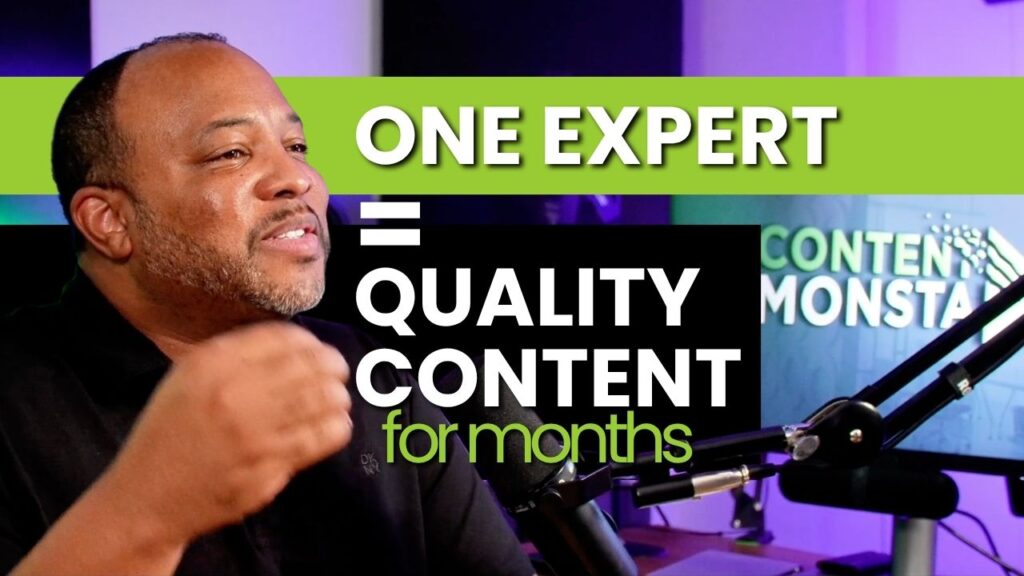 How to capture the expert’s knowledge once as a source and then build the assets from that source. Expertise sells and scales.
 - How to Get Your YouTube Videos to Show Up in AI Search
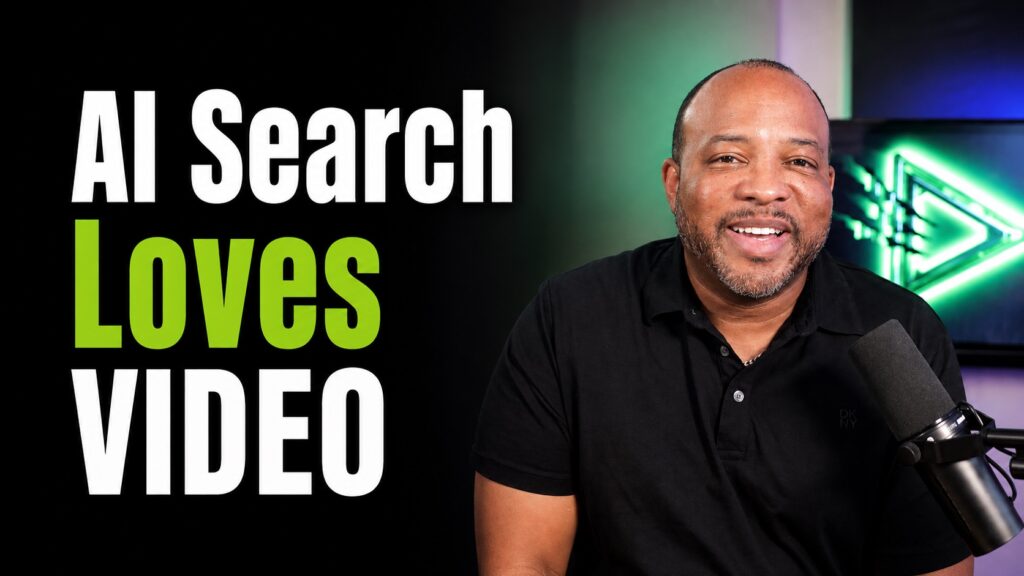 YouTube videos are among the most-cited sources in AI search. You don’t even need a big audience to get cited. But you do need to get these few things right.
 - Quality and Quantity Content: How to Use AI to Achieve Both
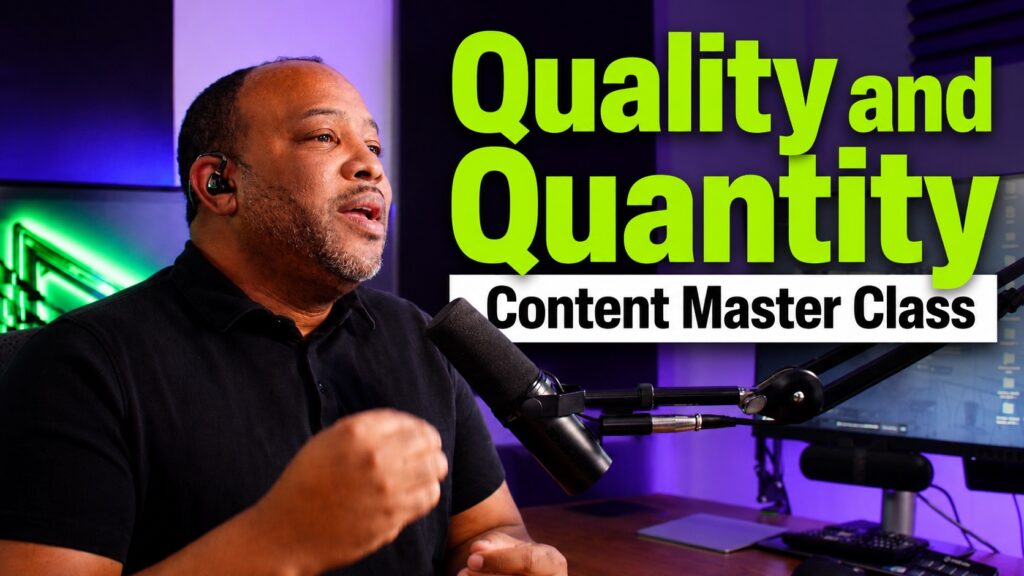 There is a path to creating quality content at scale When …