
Table of contents
Start Where AI Already Works
Teams often reach for the wrong automation first. They pick a big, visible AI workflows that touch the CRM, the website, the analytics platform, and three outside data sources, then they wonder why it never ships.
On this episode, we have Dale Bertrand, Founder and CEO of Fire&Spark, who has spent two decades turning organic search into a revenue engine for global brands, and his background is in computer engineering rather than marketing. In this The Business of Marketing conversation, host A. Lee Judge and co-host Rocio Osuna talk with Dale (LinkedIn) about where AI agents belong inside a marketing team, why the upfront work of building context is the new job, and how to measure marketing in a way that leadership respects. Two ideas anchor the conversation: automate to 80% and walk away, and give up on attribution before it embarrasses you.
Dale’s advice is to start with something small and proven.
His filter is simple. Choose a workflow that is tedious, repetitive, and something you already do often, so you know it works. Make sure it needs no data, or data from only one system such as your CRM or GA4. The more integrations a task requires, the higher the chance it breaks. Content workflows and research workflows are good first candidates, because they rarely depend on a tangle of connected tools.
Lee shared a working example from his own company. The process of booking guests for this very podcast used to be a chain of copy and paste steps: pulling invites, finding the recording link, dropping it into an email. His team handed the full standard operating procedure to AI, mapped it against the tools they already owned, and used Claude to rebuild it. Booking, guest research, and a draft question set now happen in one step. The team still reviews the questions and watches the calendar, which is the point.
Why Marketers Should Automate to 80% and Stop Chasing Attribution
The biggest mistake Dale sees is the chase for perfect. That last stretch of automation, the final 10 or 20 percent, is where people pour in twice the effort for a fraction of the return.
The smarter move is to bank the 80% win and apply the same effort to a brand new workflow. Dale put it this way:
“When you get to that 80% mark, you’ve just taken a ton of work off your plate. Now you need to decide: am I going to go for that last 20% that’s probably going to take me twice as long as the 80% took me, or am I going to start automating a different workflow where I’m going to get more bang for the buck?” ~ Dale Bertrand
For the part the machine cannot finish cleanly, put a person on it. Dale joked that the real headline of marketing’s AI moment is that he replaced AI with humans, because the human is what closes the gap on that final slice.
For AI Workflows, Context Is the Work Now
The value of an AI workflow is set long before it runs. It comes from the context you feed it. Dale described building a project management workflow that pulled from documents, emails, transcripts, and task lists. Assembling that context took him four hours, even with AI helping. What he got back was a system that runs daily, writes project plans, supports budget decisions, and sends status updates to stakeholders.
That tradeoff is the real skill. Time spent curating context up front against hours saved on the back end. And it points to where new roles are coming from, because someone has to build, train, and supervise these agents. AI amplifies the competencies a person already brings to the table, and that cuts both ways. As Dale said:
“You’re in trouble if you’re not interested in learning the technology or you don’t have expertise worth amplifying with the technology.” ~ Dale Bertrand
Both Lee and Dale connected this to the next generation entering the workforce. The students who learn the fundamentals and then use AI to execute will have an edge. The ones who let AI do their thinking never build the expertise that makes the tool worth anything. Dale, as an employer, treats it as a sorting mechanism: the people who learned despite easy shortcuts are exactly who he wants to hire.
Stop Speaking Marketing to the Business
The conversation then turned to a problem that predates AI and gets worse with it: marketers measure the wrong things for the wrong audience. Rankings, organic traffic, impressions, and likes are channel metrics. Leadership does not care about channel metrics. A CEO or CFO cares about business growth metrics, things like customer acquisition cost, conversion rates once a buyer talks to sales, and payback period on content.
Dale framed the gap as a language barrier. The marketer speaks English and explains canonical tags and traffic trends. The executive speaks Spanish and cares about financial outcomes. Lee put it plainly: keep marketing language inside the marketing team, and speak the business’s language when you walk into the room with leadership.
The reason is not comprehension. It is interest. As Lee said about a salesperson hearing about a LinkedIn post that earned 300 impressions, “Did it move my deal forward? … I don’t care about your impressions or your likes.” A number only matters if it connects to a deal moving forward.
Attribution Is Broken, So Measure Contribution
This is where Lee laid out a position he has been testing on stage. Stop trying to attribute pipeline to a single channel, because that machinery is broken. Focus on contribution instead. When a salesperson says a prospect already knew the product before the first call, marketing contributed to that. When a customer leaves a webinar feeling educated about where the company is headed, marketing contributed to that. Mark it down. The honest answer beats a fabricated hard number invented to satisfy a leader who wants precision.
Dale agreed and added a sharper edge. The hard numbers marketers used to report were never as solid as they looked; they were the illusion of precision. Accuracy that points you in the right direction is more useful than false precision that does not. Then he pushed Lee’s contribution idea one step further: translate it into dollars.
On one client project, his team quantified the value of a competitor’s comparison content and showed the client that roughly $12 million of their sales pipeline was being influenced by content the competitor published and they refused to publish. That figure ended the debate. Dale calls the method fuzzy math: build reasonable assumptions, attach a dollar value, and make a credible case that marketing influenced those dollars. Fuzzy math beats no math, and it speaks the language the C suite actually understands.
Continuing the Conversation
You can connect with Dale Bertrand on LinkedIn, learn about his agency at fireandspark.com, and find his speaking work at dalebertrand.com. Fire&Spark focuses on AI search and GEO, and helps marketing teams find the right use cases for AI agents and workflows. Dale has a full slate of fall events, including Content Marketing World, the Unbound Conference, and Digital Summit workshops on AI agents and optimizing for AI search.
The Business of Marketing podcast is produced by Content Monsta, the B2B digital marketing content company. For more on building a sales and marketing engine that leadership trusts, Lee’s book CASH is available at aleejudge.com.
Thanks for listening to The Business of Marketing podcast.
Feel free to contact the hosts and ask additional questions, we would love to answer them on the show.
Full Transcript
View the Full Transcript here
Dale Bertrand [00:00:00]:
The key is really to not pursue 100% automation. If you’re trying to automate a workflow, like maybe generating one of these pricing calculators that I’m talking about that you’ll use as a lead magnet. If you try to generate it 100%, that last 20% is going to be the hardest and take the most time and you’re going to pull your hair out and, and you’re going to wish you had listened to me when I said, hey, just try to automate it 80%. When you get to that 80% mark, like you’ve just taken a ton of work off your plate and now you need to decide, am I going to go for that last 20% that’s probably going to take me twice as long as the 80% took me, or am I going to start automating a different workflow where I’m just going to get more bang for the buck, bringing that up to 80%. And yeah, you’re in trouble. Like, you’re in trouble if you’re not interested in learning the technology or you don’t have expertise worth amplifying with the technology.
A. Lee Judge [00:00:53]:
It. Welcome again to the business of marketing. I’m a Lee Judge.
Rocio Osuna [00:01:00]:
And I’m Rocio Osuna.
A. Lee Judge [00:01:02]:
You know, a lot of marketers have suddenly become AI gurus. I mean, even I’m slow to speak about my knowledge of AI when I have friends like today’s guest who has researched and engineered in the computing space long before any of us were even talking about AI. But before we get into that guest, I want to step back a moment and we’re going to talk about what’s happening to the next generation of thinkers who are growing up with AI. Rocio.
Rocio Osuna [00:01:27]:
Yeah. So recently read a study where 86% of high school students use AI during the past school year. You know, that’s a massive chunk of our next generation really using into these tools early on. As professionals, we’re living in this really interesting dichotomy. You know, every job that I’ve seen has it as a requirement using AI. And one of our past internal interviewed persons was Robert Rose, who mentioned that we’re really lacking in the sense of our children now not really using their knowledge before they actually ask AI for their actual answer. My own kids are very young, so they’re going to grow up with AI as part of their structured education. So, Lee, thinking about this from a strategic standpoint and as a parent, how are you looking at teaching the next generation to navigate these tools and, and lose and not Losing that critical, you know, problem solving skill.
A. Lee Judge [00:02:21]:
Well, I got a front row seat to this because I’ve got a middle schooler and a high school student, and they’re always telling me about how their fellow classmates are using AI, whether they should be or not. And I’m seeing two distinctly different approaches that I think will shape all their futures. Because some students genuinely want to learn. They’re going to learn anyway. They know they’re in school to learn. They’re going to learn and they’ll learn the fundamentals and. And then they’ll use AI to execute on productivity, while the other ones will use AI as their second brain or as their brain, not even second as their brain. And they may never learn anything because we always have had a way to cheat in school and not learn.
A. Lee Judge [00:03:02]:
But those of us who wanted to learn sought to learn that we were there for that reason. So to me, it’s more of a survival of the fittest. That sounds kind of Hunger Games ish, but I think that’s what it is. Um, so people will always take the shortcut, but in. In this case, they’re only cheating themselves. And like Robert said in our last episode, they need to learn how to think first and then use AI. And, you know, some will choose to learn and some won’t. That’s.
A. Lee Judge [00:03:27]:
That’s nothing new.
Rocio Osuna [00:03:29]:
Agreed. I. I think it’s such an important, you know, AI is important tool that we have now, and it’s important to utilize it and learn from it. But as you said, Hunger Games, I like the quote you used to.
A. Lee Judge [00:03:41]:
Yeah, I had to make sure I said that quote right because I know there’s some Hunger Games fans. So let’s get into our guest today. He’s someone I lean into to understand the technical shift that AI has made on SEO and content discoverability. He’s the founder and CEO of Fire and Spark, a Boston based SEO agency that has spent the last 17 years convincing operators that organic search is a revenue engine and not just a ranking scoreboard. His background is rooted in computer engineering rather than marketing, so his perspectives run deeper than anyone just jumping on the AI train in the recent years. So let’s check out this conversation with our guest, Dale Bertrand. So, Dale, you’ve been vocal lately about AI agents, and a lot of marketing teams are sitting on workflows that take hours of human time, but are mostly repetitive, like refreshing existing content or pulling weekly, weekly analytics reports. And AI agents are starting to change what is possible in that space.
A. Lee Judge [00:04:42]:
So from your perspective, for a B2B marketing team that has not started using agents in this way. What is the smallest place to start that delivers real time savings without breaking quality?
Dale Bertrand [00:04:55]:
So I really like your framing how you’re talking about the smallest place to start because a lot of marketers, we’ll start with a big workflow, like something that’s just too big to 100% automate. And maybe it requires integrations with too many other systems like an analytics system or maybe your CRM plus your website plus 5 other sources of data like Apollo or Zoom info for sales data. That’s just way too much. Right? So starting small is absolutely the right thing to do. I like to think about content workflows and research workflows. So content workflows would be, it could just be generating an email or it could be generating content marketing content that you would publish on your website or a marketing page or a PDF or download or. I’ve. One thing that I’ve been doing is like using AI to generate calculators that I can give away, like calculating pricing for a certain type of project or, or calculating the payback period for a certain like type of content that you might, you might be creating for your marketing.
Dale Bertrand [00:06:07]:
And then on the research side, AI is really good at researching people or researching clients. If you do client work or researching competitors, there’s a lot out there. So anything that feels like a research workflow and I’ll give you the key, Lee. Cause I think this is really the key. Like when you’re asking about what, well, what is that small automation that we could start with for AI agents, the key is really to not pursue a hundred percent automation. Like if you’re trying to automate a workflow, like maybe generating one of these pricing calculators that I’m talking about that you’ll use as a lead magnet if you try to generate it 100%, that last 20% is going to be the hardest and take the most time and you’re going to pull your hair out and, and you’re going to wish you had listened to me when I said, hey, just try to automate it 80%. So that’s what I talk to my team about. Choose a workflow that’s already working so we know how to make it work.
Dale Bertrand [00:07:07]:
This isn’t something that we’ve never done before so that we have a higher probability that it’s actually going to work. At the end of the day, make sure that either it needs no data or it needs data from one system that would be either your CRM or GA4 or something like that, but only one, because there’s going to be a higher risk chance of failure if it needs access to multiple systems. And like you said, make sure it’s small and don’t try to 100% automate it. Go for 80% automation and then cut and run. And the last thing I’ll say about the 80% automation, because I talk to my team about this all the time and it’s so important, is if you automate that workflow, that workflow that’s tedious and repetitive and you do it often and it’s proven so that you know that it works, and it only needs one integration, if it needs any integrations at all. When you get to that 80% mark, like, you’ve just taken a ton of work off your plate and now you need to decide, am I going to go for that last 20% that’s probably going to take me twice as long as the 80% took me, or am I going to start automating a different workflow where I’m just going to get more bang for the buck, bringing that up to 80%. And that’s really important.
A. Lee Judge [00:08:19]:
Yeah, because you have that 80% win. Take that, win that 80% win, and go with it and get 80% somewhere else.
Dale Bertrand [00:08:27]:
Exactly. People get so hung up on 100% because that last 10. 5% was so hard to get things working perfectly. So maybe you just throw a human at it. I mean, go figure, right? Like, now we’re replacing AI with humans. Like, I want. I want the headline of this episode to be dale just replaced AI with humans. Because that’s what we’re talking about.
A. Lee Judge [00:08:49]:
It may be, you know, in fact, the process of getting you, for example, on this podcast, has been automated because a human gave us the. Our sop. He gave us the whole procedure of what he was doing. And we showed that to AI and said, what of this process can we optimize with AI? But the crucial first step was our AI systems have our whole tech stack. And we say, we’re going to try to accomplish this with what we already have. Like, don’t throw a bunch of new tools and say, oh, you could go buy this and buy that and plug in this.
Dale Bertrand [00:09:25]:
No.
A. Lee Judge [00:09:25]:
Or we could build that. We say, look, here’s our tech stack. Here’s our problem. How can we optimize it? And part of the situation in this case with the podcast was they say, oh, I see that your person is copying the invite from this person and cop and adding it to that person and then going out and finding the link for the podcast recording session and putting it in the email. All these steps were copy and paste and repetitive. And we use Claude for this case. It mapped the whole thing out using our existing tools, and now it’s fully automated, from booking somebody to doing a dossier on them and giving the questions and everything all done in one step. And it’s 80%, because we’re still going to look at the questions, look at the calendar, monitor it.
A. Lee Judge [00:10:10]:
But I appreciate what you said about the 80%.
Dale Bertrand [00:10:13]:
Yeah, it’s 80%, but how much time is it saving you? Right? Like, it’s still saving you a ton of time. And the part of that, the story you just told that I want to double click on is that you put in the effort, you took the time to build the context that AI would need, which is a description of the tools that you currently have and what you’re using them for. So let’s say that took 20 minutes, maybe a half hour, who knows? But you’re getting an ROI on that investment of accumulating that context, of writing that context. And what I’m finding with a lot of the automations that we’re building is there’s a trade off between how long will it take us to put together the upfront context that AI will need, the agents will need in order to do the job, versus, like, the return we expect, which is the hours saved, or the value that we would be getting out of those agents, or that workflow that we’re building. And I built one to help me with some project management. And this morning I was on the phone with one of my project managers and I told her that it took me four hours to get all of this context from different documents and emails and transcripts and asana tasks. And they just put it all together in one place. And yes, I used AI to help me, but it still took a long time to really get that right.
Dale Bertrand [00:11:29]:
But now I have this insanely useful automated workflow that runs on a daily basis that helps me understand what’s next, what’s going on. It writes project plans for this particular project, helps me make budget decisions because it’s got all the budget numbers and it’s just, it’s just insane. Sends daily status emails to stakeholders for that particular project. But it’s because I put in the effort up front to basically, like, curate that context. And. And we’re going to be hiring people. Like, we keep talking about AI taking jobs. AI is making jobs, AI is creating jobs.
Dale Bertrand [00:12:04]:
When it comes to, like, curating that context and people who know how to build these AI agents and build these AI workflows.
A. Lee Judge [00:12:11]:
If you’re a marketer struggling to create content that’s truly unique to your brand, here’s the key. Your experts and executives are your most valuable content assets. Conversational content like videos and podcasts featuring your team stand out above all all other content. So instead of creating content that sounds just like your competition, start leveraging the unique voices inside your company. Thought leaders and authentic conversations build credibility and engagement. At Content Monster, we specialize in remote content production, meaning we coach your people to be comfortable on camera. Then we capture and produce high quality videos and podcasts featuring your team and customers. No need for expensive production crews, long production plans, or complex setups.
A. Lee Judge [00:12:59]:
Want to see how it works? Visit contentmonsta.com today to learn more.
Rocio Osuna [00:13:05]:
So I want to touch up on something you just said about the AI agents and the jobs. I just came back from a conference called TechCon. SoCal talked all about AI and technology and one of the C suite panel members mentioned that famous line, you know, you won’t be losing your job, you know, to AI, you’ll be losing to someone that knows how to use it. And you talk about AI agents and still having that human element as well. If we look through it through human lens, there’s still some real anxiety out there. How do you respond to marketers or agencies who look at sheer, you know, speed of AI agents and think, sure, it’s a collaborator today, but it’s going to replace me tomorrow. How do we calm those fears with reality?
Dale Bertrand [00:13:47]:
Well, the reality is that you need humans to run these agents and run these workflows. So think about that for a second. We’re talking about, well, only automate to 80%. All right, well, we need humans we’re talking about. All right, well, let’s get in there and figure out where we should start. What should we be building? Something that is a proven workflow, that doesn’t need a lot of integrations, where we can get some value in 30 days to show our our leadership so that we can get resources to continue building. Like, that’s a human that’s doing all of that, right? And even the automation that Lee’s talking about, we needed a human to know where to look for the information that AI would need in order to build that in the first place. So really what AI is doing is making making us as marketers more productive and to produce higher quality work.
Dale Bertrand [00:14:37]:
But you still need the humans. And there are some humans that, for whatever reason Might not be interested in using the technology or building with the technology, or they might not have a skill set that is worth amplifying with AI. Put a pin in that one for a minute and yeah, you’re in trouble. You’re in trouble if you’re not interested in learning the technology or you don’t have expertise worth amplifying with the technology.
A. Lee Judge [00:15:08]:
You know, when you said put a pin in that made me think about all these, all these graduation announcements, graduation speeches that are getting booed. And I’m a bit on the fence because I empathize with the students who have spent four years digging into a career. And then it may be appended by AI but at the same time, I think it’s a new tool. Learn the tool, Apply it to what you learn. Move forward. What are your, what are your thoughts on that?
Dale Bertrand [00:15:34]:
Well, first of all, glad we don’t have a studio audience, because we would be getting booed right now, right now.
A. Lee Judge [00:15:39]:
Say the word AI in the science.
Dale Bertrand [00:15:42]:
That is really important. And if you need some background boos while you talk. Lee, I can, I can do my best while we’re talking today, but really what I, what I think about it is that, like, the students who are booing have, like, legitimate gripes, for sure, but it has more to do with the education that they just paid half a million dollars for that didn’t prepare for them for the, the world that they’re entering. And you could imagine if the schools that they’re graduating from had been, had some vision during their freshman or sophomore year, you know, two, three years ago, to prepare them for what’s happening right now, the job market that they’re, they’re entering, that they might have a different, different attitude, different, different fortunes that, that they’re facing, they’re going into the market for. But the truth is, like, they’re not prepared. And they, they are justified in, you know, being upset and angry about that. I wouldn’t, I wouldn’t put that towards AI. The reason why I wouldn’t put that towards AI is because we all know those of us who’ve been in the industry for a while, it’s some young kid who just came out of college who takes the time to learn these tools that are going to threaten our jobs, right? But instead they’re upset because in many cases, the jobs that they were preparing for, that they were told by their school that they were being prepared for, that they would exist, that they were getting the right education for the career that they wanted, those jobs aren’t hiring as many people as they were before.
Dale Bertrand [00:17:20]:
That’s real. So I think the gripes are real. And then on the other side, I feel like AI is just unstoppable. And there are opportunities for recent grads. They might not want them, but there are opportunities.
A. Lee Judge [00:17:35]:
Well, you know, it’s unstoppable. I agree. It’s also extremely fast. You know, our school systems are built on these four year leaps. Four years of high school, four years of college. Three, four years. Maybe a grad. AI doesn’t care about our four years.
A. Lee Judge [00:17:48]:
It’s going much faster.
Dale Bertrand [00:17:49]:
Why aren’t they looting the president’s office at the university? University, like you shouldn’t be doing. You’re just saying, hey, I want my money back because you, you sold me a bill of goods. You lied to me about the opportunities that I would have available to me because you didn’t understand how things were changing. So, like, what’s the guarantee? What’s the refund policy on this degree? Maybe I don’t want it.
A. Lee Judge [00:18:10]:
Well, I was going to say I was talking to schools for about the past three, four years. So that’s a whole college career. And when I first asked about AI, no one raised your hands. They might have known about it, but they were afraid to say so. Second year, a few hands. Third year, I would say I would finally cross the halfway mark of half the students raised their hand and said they use AI, but they also used it in fear and looked around to see the professors knew they were raising their hands because they weren’t supposed to be using AI. And they were. That is a failure on the school system because those students have been told the past three or four years, AI is bad, don’t use it.
A. Lee Judge [00:18:48]:
And now they’re in a world that’s just the opposite.
Dale Bertrand [00:18:51]:
Yeah, absolutely. Like you can’t get away from it and they don’t have the expertise. So there’s another piece of it, which is that AI amplifies expertise. It amplifies the competencies that you bring to the table when you start prompting it, or building agents or whatever you’re doing. So they do need the opportunity to build the right expertise for whatever that is. Like they should be doing that in school is what we’re saying. But that’s not what they were told. They were told that they would learn theoretical, theoretical concepts and then they would find an employer.
Dale Bertrand [00:19:26]:
You and I, Lee, like we run agencies. They would find an employer who’s happy to subsidize their practical training. And that’s not true.
A. Lee Judge [00:19:36]:
Yeah, marketers and Sales leaders. If you want to close more deals and drive real revenue growth, you need cash. And I don’t mean money. I’m talking about my new book, Cash the Four Keys to Better Sales, Smarter Marketing and a Supercharged Revenue Machine. It gives you a proven framework to improve the four areas that impact revenue the most, communication, alignment systems and honesty. You need a stronger sales and marketing engine and this book will show you how to build it. Get your copy now@aleadjudge.com cash now back to the content.
Rocio Osuna [00:20:15]:
So what do you say about the other piece of higher education? Is someone else brought it up? I think it was Robert Rose who mentioned, you know, AI gives you the immediate answers. And so a lot of students are coming back and saying not really thinking, critical thinking themselves before they ask AI and get the actual answer. What do you think of that piece of. Okay, now this generation is just used to the straight answer, right? And not using their brain before they actually ask AI. What do you think is the solution there?
Dale Bertrand [00:20:43]:
What?
Rocio Osuna [00:20:43]:
What, how do we not fix that? Obviously there’s huger pieces to that puzzle there. But you know, what is the way forward for that?
Dale Bertrand [00:20:51]:
Yeah, so. So two things. One is like it’s on you. If you went to school, paid all that money, took on that student loan debt and didn’t learn anything, don’t come whining to me about that full stop and I’ll let that sink in. And then the second thing is I’m an employer so I’m looking to hire the best people. Right. And it’ll get harder as more people are tempted to basically skip their training. Right.
Dale Bertrand [00:21:18]:
Because of what you’re talking about because AI can give them the answer rather than them actually doing the work. But look at it this way, think of it as the big AI sorting system. Some of, I guess all of students nowadays in college are offered AI and they could use it and they can get away with it. If they do, they’re not going to pass my interview. If they don’t and they actually learn something, then they’ve got agency. They’re like self starters, they’re self motivated and they’re exactly the type of person that I want to hire. So if my as an employer, if my interviewing can select out the kids who had access to AI but learned despite AI then and I could hire those people then. Those are the people that I’m looking for.
Dale Bertrand [00:22:08]:
Of course it’s really tempting with social media and AI and video games and Starbucks on every block to like and I guess kegs at every single fraternity on campus to like, not do your work. That’s always been true. So. And employers have always looked for people who actually did the work.
A. Lee Judge [00:22:29]:
So I want to make sure we don’t miss the opportunity to get some of this amazing SEO knowledge out of you, Dale, because after all, your agency specializes on that and you’re in this great place for being one. I want to make sure I let the audience know one. You know, you’ve worked in computer engineering before. We talked about AI. You have a SEO agency, you have that experience to bring it all together. So I want to give something for the people who were already working in the company and they’re working in marketing. And now that the bottleneck for many companies was creativity, and that’s been lifted now, and now they’re having to think more about tedious analytical and operational work that fills their day. So when AI lifts that creative bottleneck, what actually changes about how an SEO or a marketer spends their day?
Dale Bertrand [00:23:19]:
So marketers or people who are focused on SEO, at least when they’re, they’re dealing with like the organic channel and trying to generate, you know, customers from organic. Like we were focused on rankings and organic traffic, and that’s how we would measure success. Those are channel metrics. And it’s always been true that our leadership, imagine like our CEO or even our cfo, they don’t give a crap about channel metrics. They care about business growth metrics. So that’s things like, is the content that you’re creating, regardless of whether it’s getting picked up by Google, is it helping to reduce our customer acquisition costs? Is it improving our conversion rates when they finally talk to a salesperson? You know, what’s the payback period? Is another way to look at it. On the content that we’re creating for our marketing. And that’s what our C suite, our leadership, our, our cmo, that’s what they care about at the end of the day.
Dale Bertrand [00:24:14]:
And these are business growth metrics, not channel metrics that have always been obscure and are becoming less and less meaningful. We know that attribution is broken, so it’s going to be hard for us to create content or optimize for search engines and search traffic. And to show our leadership, hey, here’s the number of dollars we’ve created based on traffic numbers. So we need to find other ways of connecting our geo efforts and geo content to financial impact. But marketers should really be thinking about it as financial impact. And that is what you’re trying to prove. That’s what and that’s in lieu of attribution, since attribution is broken. All right, Attribution is broken.
Dale Bertrand [00:25:00]:
Let’s just switch over to financial impact, and we’ll do some fuzzy math around that. But fuzzy math is better than no math.
A. Lee Judge [00:25:06]:
Yeah, and that’s what I’ve been. I’ve been working on all my talks for the upcoming, you know, speaking season, basically in the fall. And it’s all moving to that. It’s all, you know, how is it impacting revenue? How is it going to, you know, reduce your customer acquisition costs? But the problem is, you know, marketers, even when they understand that from us, when we’re on stage teaching it to them, the leadership has to change their understanding and not come back with the. Yeah, but I had a report last month. Yeah, but you gave me numbers last year. And my response to that is, yeah, but those numbers were, they don’t work anymore. It’s broken.
A. Lee Judge [00:25:40]:
Let’s move forward with. How can we show that our. Our engine is working efficiently and let you understand that the engine has to be in the car to. To win the race? And you can take the engine out, the car stops.
Dale Bertrand [00:25:55]:
If you don’t mind, I want to push back on that a little bit, please. Because, like, imagine you’re a marketer. You’re talking to your leadership. You know, they. They’ve got a different perspective on the business, and they care about different things than you care about. It’s almost as if, like, you speak English and they speak Spanish and you just don’t know how to speak their language. And, you know, they speak a little bit of English. So you tell them, hey, here’s.
Dale Bertrand [00:26:16]:
Here’s how the rankings have moved last month. Here’s. Here’s how organic traffic has changed. Well, we made this tweak to these canonical tags, and we expect us to. To get more traffic in. Give it three weeks. Give it three weeks. You’re speaking English.
Dale Bertrand [00:26:28]:
They don’t speak English. They speak Spanish. They understand a little bit of what you were saying. And the reason why I’m pushing back, Lee, on what you’re saying is because, yeah, if you’re still speaking that language and trying to get them to look at a different set of metrics or look at the channel differently. They never really understood what was coming out of your mouth in the first
A. Lee Judge [00:26:48]:
place, but we’re actually saying the same thing. I’m telling marketers to stop speaking marketing to sales or to the business. They don’t care. They don’t care about all that stuff. You’re speaking Keep that in the house. Speak that language at home. Don’t take that language to your executives and expect them to understand it or even care about it.
Dale Bertrand [00:27:04]:
Yeah. So then if they speak Spanish, you need to be speaking Spanish. Like is really what it comes down to. Because now we can speak their language, which is financial. So that’s figuring out what metrics we’re able to translate into dollars. Like the payback period for a dozen articles that might come, cost us a few grand or something. Making up numbers here. But you know, what’s the payback period on that few grand? Or if we’re building out visibility in AI search engines, we’re gaining more awareness in the market.
Dale Bertrand [00:27:39]:
And how does that affect our close rates? When somebody finally talks to a salesperson, we ought to be able to measure that. But that’s a financial impact. We did a project where we were trying to convince one of our clients to publish comparison content. And it’s hard to convince clients to publish comparison content for a variety of reasons, legal reasons. But also it’s not a good look if you’re saying trash talking to your competitors. Right. So what we were able to do was to quantify the value of their competitors comparison content and say that $12 million of your sales pipeline, and these are like deals that are in your CRM are being influenced by this content that your competitor put out there and not influence by the content that you refuse to publish. And then now we’re talking their language because it’s $12 million.
Dale Bertrand [00:28:27]:
You put that in my pocket, that shut me up. And you put that in his pocket, he’ll stop speaking Spanish real quick. So we’re trying to get their attention, get the C suite’s attention, your manager’s attention, by rolling out these dollar figure metrics rather than channel metrics that nobody understood in the first place.
A. Lee Judge [00:28:48]:
Yeah, and I’ll go in addition to that, not a matter of even understood. It’s care. Like if I’m a salesperson and you tell me, hey, my LinkedIn post got 300 impressions, I don’t care. Did it move my deal forward? You know, is it making that person closer to making it easier for me to close a deal with them? I don’t care about your impressions or your likes.
Dale Bertrand [00:29:08]:
You try telling your enterprise salesperson that they’re, they got, let’s say, half a million dollars in commission last year, last quarter. I don’t know, I’ve never been an enterprise salesperson. And you tell them the dollar value that was generated by, influenced by or closed by the content marketing or maybe the AI visibility that you’re working on as a marketer, then they’ll pay attention because that’s dollars in their pocket. That’s their kid’s college money. That’s their rent. That is food on their table. That’s something everybody understands.
Rocio Osuna [00:29:41]:
So you touched on this a bit in that same top process. You know, you deal with clients, you give them all the data, all the information. You know, you’re the expert. What is the number one advice you find yourself repeating to clients when you give them that data and they ignore it? What’s your secret to breaking through that friction?
Dale Bertrand [00:29:59]:
It’s really back to this business growth orientation. So we speak the language of business growth, not the language of traffic growth. And that’s the big distinction right there. So it really. But to answer your question, it really depends on who I’m talking to. Am I talking to a CMO or a C suite individual who really gets it, and they feel like I’ve just handed them a glass of cold water? That’s from Steve Jobs handing someone a glass of cold water in hell. It’s like, oh, thank you. You’re not talking about canonical tags, but if I’m talking to a marketer, we might be their SEO agency, and they’re looking to us to give them the ammunition that they need to keep their budget or grow their budget or expand their team or just keep their.
Dale Bertrand [00:30:48]:
And what I do is I’ll give them reports and slides that they can use to make their argument, but it’s not going to be like rankings reports. It’s going to be business growth metrics around the segments that they care about the product they might have just launched. We had another situation where a client was launching a new product and they were trying to contribute to a report around how successful the product launch was. And then we’re able to say, well, because of what we did with content, we take responsibility for X percentage of the revenue that was generated during the launch. Something like that. And when marketers hear that, they’re like, yeah, I get it, Dale, I get it. My CMO would love that. My CMO would love to take that to our CEO, but I have no idea how to do that math.
Dale Bertrand [00:31:36]:
And then the truth is, you’re just not doing math like you’re used to doing math. You’re doing what I call fuzzy math, where you’re doing your best to come up with some assumptions that allow you to do math. And then you’re also, you’re pulling out dollar figures and trying to figure out how you’re going to justify that, your content, your SEO campaign, whatever it is, influence those dollars so you can make a credible. You can make a credible argument that your marketing activities influence those dollars, which is different from attribution. Stop trying to do attribution. Attribution is saying something different, which is saying that this percentage of our pipeline or this number of dollars can be attributed to this specific channel, which we just can’t do that anymore. So stop trying. So we need to.
A. Lee Judge [00:32:33]:
This is something I’m testing. And, you know, we’re both speakers. We go on stage and we test our hypotheses. But my thing is, I think it’s more important for marketers to focus on contribution versus attribution. I would say give up on attribution for a while, because right now it’s broken. Focus on contribution. What did. What did your marketing team do? What did the content you create, how did it contribute to.
A. Lee Judge [00:32:59]:
To moving the deals forward? So if a salesperson says, I was on a call today with the customer and they already knew about our product, check the box. You contributed to that. Or after the webinar, we talked to this particular customer and they felt well educated about where we’re going, check the box. Marketing contributed to that. And if marketing can continue to contribute to the customer’s journey, then marketing should make a mark to say, look, now we have ways to show you where we contributed. Problem with that, obviously, is there’s not hard numbers in there. But I think it’s better for marketers to be honest about that than to come and make up some numbers just because the CEO needs hard numbers.
Dale Bertrand [00:33:43]:
And I don’t think you need hard numbers. I don’t think you ever needed hard numbers. What you had was the illusion of hard numbers. So precision, Just going back to my engineering school, is when you’re able to measure things to the nth decimal point, and those are repeatable. And what you have is the illusion of precision and accuracy is about numbers that might not be to the whatever decimal point, and they might not even be repeatable. They might be scattered, but they are useful in the sense that they point you in the right direction. And they also give you the magnitude of whatever trend it is that you’re trying to detect, detect, or manage. So what I think you’re really talking about, Lee, is that giving up on the illusion of precision in favor of accuracy that points you in the right direction.
Dale Bertrand [00:34:30]:
And the example that I gave around, or the example that you gave around talking to salespeople and to understand what messages and what people they already know that they’re talking to so that you can figure out how well your content and your brand campaigns are doing. That is pointing you in the right direction. But it’s not precise, it’s not hard numbers. But it doesn’t matter because that’s not really what you need. And the one thing I’ll add to your example, I love your example, Lee, because you’re trying to measure contribution instead of attribution. But I would say take it one step further and translate it into a dollar value. So when you’re able to look at specific deals that were influenced by some brand marketing or some content, just, just add up the numbers. Say, hey, it’s $12 million worth of our pipeline that is influenced by the content that we’re producing.
Dale Bertrand [00:35:23]:
That that will get. Get your management to notice.
A. Lee Judge [00:35:26]:
Perfect.
Rocio Osuna [00:35:26]:
All we care about is money.
A. Lee Judge [00:35:30]:
That might be the M$. Yeah. It might be the mic drop right there. Well, Dale, it’s always awesome to talk to you because of the depth of your knowledge. I’m sure we’ll all see each other on the road at these the upcoming events this year. Before we go, tell us what you have going on. We might can catch you at or your company. Tell us about Delbert Tran real quick.
Dale Bertrand [00:35:52]:
Well, I’m taking the summer off from doing from doing conferences, but in the fall I’ll be doing Content Marketing World and the Unbound Conference, formerly known as the Inbound Conference. Spoke at those two last year. Both amazing events, like really enjoy everybody that I meet there. So I’m excited about it. I’m also doing a digital summit, so I’ll do a workshop there. It’ll be like three hours on using AI agents. Then another one about geo and optimizing for AI search. That one’s in Philadelphia.
Dale Bertrand [00:36:22]:
I don’t know the date, but I’ve got a bunch of events in the fall after I take some time off in the summer.
A. Lee Judge [00:36:30]:
And you got to mention your company, Fire and Spark.
Dale Bertrand [00:36:32]:
Oh, yeah, we’re Fire and Spark. So we do AI search. So we’re all about AI search and geo. And then we also help marketers to use AI. You know, help them to discover the right use cases for AI agents and AI workflows. But primarily we’re a geo agency.
A. Lee Judge [00:36:50]:
Awesome.
Dale Bertrand [00:36:50]:
Great.
A. Lee Judge [00:36:50]:
Well, thanks again, Dale.
Dale Bertrand [00:36:52]:
All right, well, thanks for having me. Fun conversation.
Rocio Osuna [00:36:55]:
Thank you for joining us in this episode of Business of Marketing Podcast.
A. Lee Judge [00:36:59]:
Catch you next time.
Dale Bertrand [00:37:04]:
Thank you for listening to the Business of Marketing podcast, a show brought to you by contentmonsta.com. the producer of B2B digital marketing content show notes can be found on contentmonsta.com as well as aleadjudge.com.
- One Expert Interview Scaled Into Quality Content
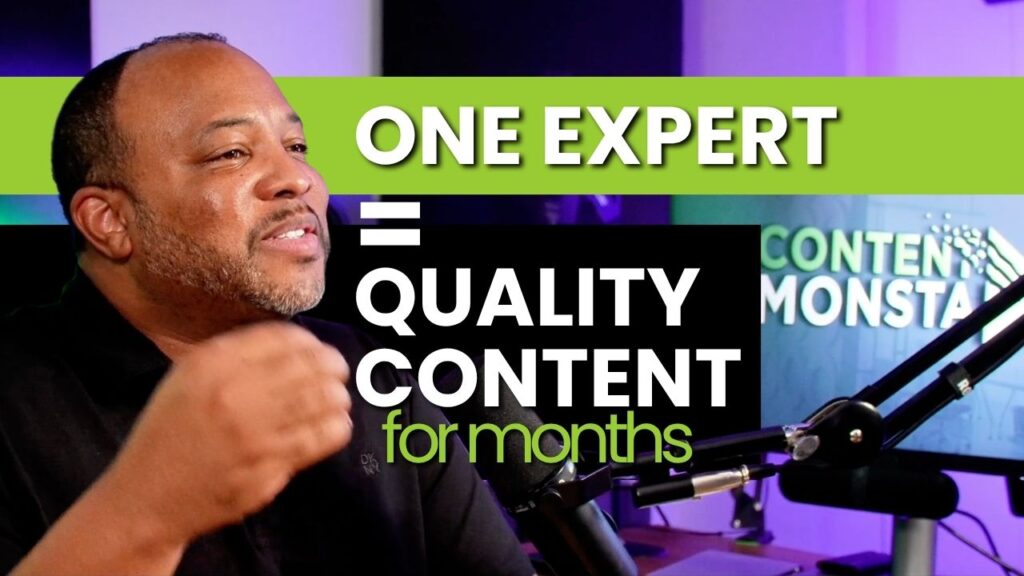 How to capture the expert’s knowledge once as a source and then build the assets from that source. Expertise sells and scales.
 - How to Get Your YouTube Videos to Show Up in AI Search
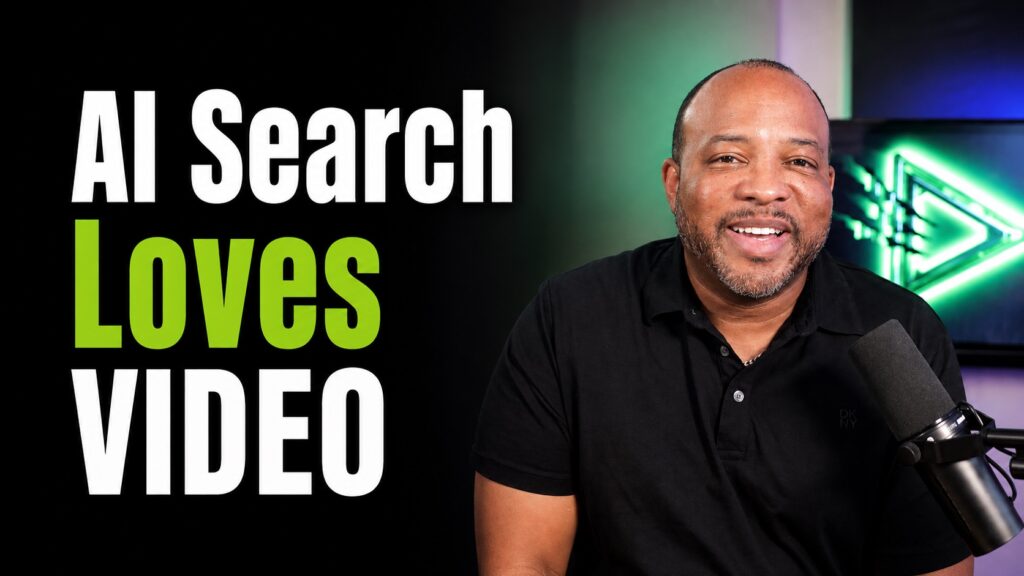 YouTube videos are among the most-cited sources in AI search. You don’t even need a big audience to get cited. But you do need to get these few things right.
 - Quality and Quantity Content: How to Use AI to Achieve Both
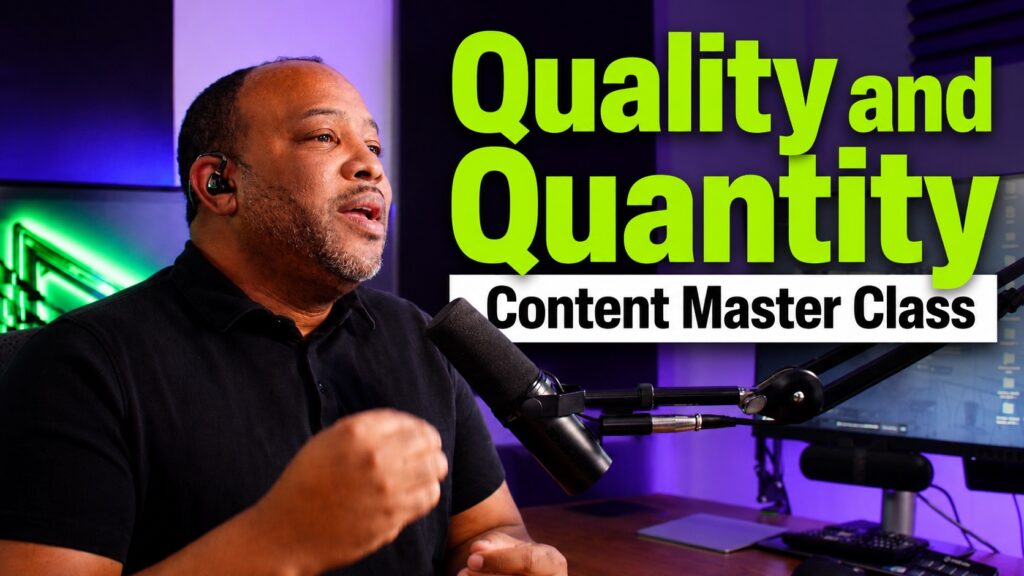 There is a path to creating quality content at scale When …